Program
About NoD
#divadlo #galerie #cafébar #vernisáž #přednášky #ostatní

JÁ, DIAGNÓZA / + - VeDvou

Radek Brousil & Viktor Timofeev: The Hammer Strikes the Bell

How can one depict the city today when it is no longer merely an urban whole, but also a psychic landscape, a data infrastructure, and a space of permanent tension? And how can one grasp the metropolis at the moment when its everyday reality breaks down into layers of personal projections, collective affects, and invisible systems that shape our movements, relationships, and modes of perception? The international exhibition project The Hammer Strikes the Bell by New York-based Latvian artist Viktor Timofeev and Czech artist Radek Brousil, prepared together with curators Boris Ondreička and Pavel Kubesa for Prague’s NoD Gallery, enters precisely this field of meaning. Here, the city does not appear as a stable backdrop, but as a living, multilayered organism in which subjective experience collides with the logic of late-postmodern infrastructures. The joint project by Brousil and Timofeev is conceived as a complex exhibition situation in which images, drawings, and a spatial site-specific installation are interwoven into a scenographic whole. The exhibition reflects the specific chronotope of the metamodern gigapolis — a city that is simultaneously a concrete place and a mental state, a set of material structures and a field of imagination. The artists are interested in the intricate image of buildings, people, technologies, and collective psyche that emerges from the structures of today’s metropolises. The exhibition is therefore not built on a mere dialogue between two media or two artistic signatures. More important is the very nature of their encounter: both Brousil and Timofeev have long cultivated a sensitivity to what remains beneath the surface of the visible world, whether power regimes, infrastructures, cultural codes, or unspoken models of identity. From this perspective, The Hammer Strikes the Bell transforms the gallery space into a situation in which the city becomes not only a theme, but also a method. The viewer does not enter a closed narrative, but rather a mutable scenery in which a wide range of individual and collective dramas may unfold. Viktor Timofeev (*1984), whose practice clearly extends beyond the framework of Central and Eastern Europe, is an internationally established artist living and working in New York, whose interdisciplinary practice brings together drawing, painting, video, sound, software, and experimental games into complex environments situated at the intersection of autofiction, worldbuilding, and systems thinking. In 2025, he presented his most extensive museum exhibition to date, Other Passengers, at the Latvian National Museum of Art in Riga; he has also exhibited at the Hessel Museum of Art in New York, Bozar in Brussels, and the National Gallery in Prague. Radek Brousil (*1980) enters this dialogue as an artist who has long reflected on the relationship between image, material, and social reality. In his post-photographic approach, he combines photography with textile, object, video, installation, and painting, and consistently engages with socio-political and environmental themes, postcolonial tendencies, and the question of a “new sensibility.” His work grows out of a critical relationship to standardized interpretations of late capitalism, the Anthropocene, and global power relations, and has increasingly also turned toward the politics of time. Brousil is among the notable figures of the Czech art scene with strong international experience, as confirmed by his projects in London, Brussels, Budapest, Tokyo, and other institutions.  

Vyprodáno

MICHAELŮV MASHUP

This event is in Czech only!

Vyprodáno

27 LITRŮ UMĚLÝ KRVE / Janek & Natálka & kol.

Vyprodáno

27 LITRŮ UMĚLÝ KRVE / Janek & Natálka & kol.

Vyprodáno

27 LITRŮ UMĚLÝ KRVE / Janek & Natálka & kol.

MICHAELŮV MASHUP

This event is in Czech only!

FAKE CRIME / Joke Division

This performance is in Czech only!
Premiéra

MICHAELŮV MASHUP

This event is in Czech only!

UNDERGROUND COMEDY CLUB

This performance is in Czech only.

HAMU Graduate Choreography Showcase

An evening of graduation projects by third-year choreography students at the Academy of Performing Arts (HAMU).  Nadkroví Barbora Sváčkov…

ŠPIONI / Brémy

This performance is in Czech only!

JÁ, DIAGNÓZA / + - VeDvou

JAK SE DĚLÁ DIVADLO / Divadlo MASO

This performace is in Czech only.

Vyprodáno

27 LITRŮ UMĚLÝ KRVE / Janek & Natálka & kol.

Vyprodáno

27 LITRŮ UMĚLÝ KRVE / Janek & Natálka & kol.

Vyprodáno

27 LITRŮ UMĚLÝ KRVE / Janek & Natálka & kol.

Vyprodáno

THE LEGEND OF LUNETIC / Janek & Natálka & kol.

This performance is in Czech only!

Vyprodáno

THE LEGEND OF LUNETIC / Janek & Natálka & kol.

This performance is in Czech only!

Vyprodáno

THE LEGEND OF LUNETIC / Janek & Natálka & kol.

This performance is in Czech only!

SCAMMERS ATTACK / Janek & Natálka & collective

Scamming is art. They have been with us since the beginning of mankind. They are all around us. And they are more and more of them. There´s no place you…

SCAMMERS ATTACK / Janek & Natálka & collective

Scamming is art. They have been with us since the beginning of mankind. They are all around us. And they are more and more of them. There´s no place you…

FAKE CRIME / Joke Division

This performance is in Czech only!

THE LEGEND OF LUNETIC / Janek & Natálka & kol.

This performance is in Czech only!

THE LEGEND OF LUNETIC / Janek & Natálka & kol.

This performance is in Czech only!

THE LEGEND OF LUNETIC / Janek & Natálka & kol.

This performance is in Czech only!

27 LITRŮ UMĚLÝ KRVE / Janek & Natálka & kol.

27 LITRŮ UMĚLÝ KRVE / Janek & Natálka & kol.

27 LITRŮ UMĚLÝ KRVE / Janek & Natálka & kol.

UNDERGROUND COMEDY CLUB

This performance is in Czech only.

JAK SE DĚLÁ DIVADLO / Divadlo MASO

This performace is in Czech only.

THE LEGEND OF LUNETIC / Janek & Natálka & kol.

This performance is in Czech only!

THE LEGEND OF LUNETIC / Janek & Natálka & kol.

This performance is in Czech only!

THE LEGEND OF LUNETIC / Janek & Natálka & kol.

This performance is in Czech only!

FAKE CRIME / Joke Division

This performance is in Czech only!

UNDERGROUND COMEDY CLUB

This performance is in Czech only.
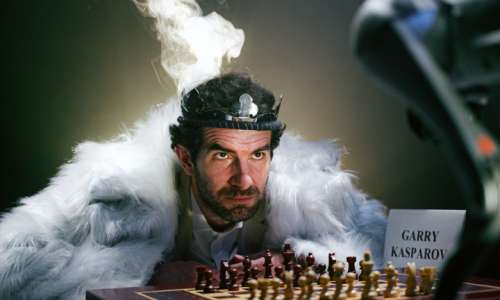
27 LITRŮ UMĚLÝ KRVE / Janek & Natálka & kol.

27 LITRŮ UMĚLÝ KRVE / Janek & Natálka & kol.

27 LITRŮ UMĚLÝ KRVE / Janek & Natálka & kol.

THE LEGEND OF LUNETIC / Janek & Natálka & kol.

This performance is in Czech only!

THE LEGEND OF LUNETIC / Janek & Natálka & kol.

This performance is in Czech only!

JAK SE DĚLÁ DIVADLO / Divadlo MASO

This performace is in Czech only.

SCAMMERS ATTACK / Janek & Natálka & collective

Scamming is art. They have been with us since the beginning of mankind. They are all around us. And they are more and more of them. There´s no place you…

SCAMMERS ATTACK / Janek & Natálka & collective

Scamming is art. They have been with us since the beginning of mankind. They are all around us. And they are more and more of them. There´s no place you…

JÁ, DIAGNÓZA / + - VeDvou

FAKE CRIME / Joke Division

This performance is in Czech only!

UNDERGROUND COMEDY CLUB

This performance is in Czech only.
Sign up for the newsletter

cz

Pavel Příkaský & Miroslava Večeřová: Images That Occupy Thoughts

Pavel Příkaský & Miroslava Večeřová: Images That Occupy Thoughts
Fabruary 16 - March 17, 2017
Curator: Pavel Kubesa

In their common projects, Pavel Příkaský and Miroslava Večeřová focus on intuitive, fluid installations which are basically framed by the medium of painting. Medium of painting is “infecting” the character of the work´s photographic element, the nature of installation in space, to evolve into what can be regarded as a living, performing corporeal entity. It becomes a device in the process of exploring a preconceptual world, a way of inducing feelings, an endeavour to make real the sensation of touch: it is something that relates the cognitive body with the irrational aspect of its existence. 

A recurrent subject of Pavel Příkaský´s paintings are fragments of an animal´s body. There, as he believes, an animal actually “offers itself” as an aid on the way to the understanding of human corporeality: observing an animal, I feel as though I were observing myself, by way of comparison. In a picture, the image of an animal raises the viewer´s awareness of their own “self”, their own bodies. Thus it sets up a certain mode of subjectivity, a kind of tuning that carries us through a more complex aesthetic situation which has at its core concern with an elementary sensibility, i.e., corporeality  as a clue to the Images That Occupy Thoughts.

Miroslava Večeřová balances out paintings with digital photographs depicting mundane objects of everyday use relating to the human body. Večeřová´s creative intervention consists in modifying the contextual situation in which these objects are set, which may be either an artificial stage set simulating natural environment, or a characteristic angle of view, choice of a particular photographic focus, or concentration on minuscule disruptions. Consequently, an ordinary “appliance” or tool are transported into a newly defined reality, a fictional sort of nature, wherein products of civilization figure as newly engendered bodies of familiar creatures.

Příkaský and Večeřová take their treatment of the subject of corporeality further, to a wider cultural area. They are concerned with the ways in which we become aware of our bodies, how they are formed in response to the surrounding world, but also with the ways in which the human body itself partakes in structuring the surrounding world and in modifying its nature. Their images of an animal tail, horns, or of a crocodile´s grin, are to some extent questions about the condition of the purported human domination of this planet, which we have taken for granted as a one-way source of energy used for the fulfilment of our own privatized aims. To be sure though, by no means do Pavel and Miroslava aspire to postulate there an a priori doctrine of social criticism – they don´t necessarily regard the exponentially accruing potential of new hi-tech technologies as means of distancing us from a natural state. Rather, they assign them the status of a legitimate component of that which we have become used to define as nature. All that said, they regard this type of externalization of the senses in terms of a potential atavism: for them, new technologies and modes of the world of creation enable us to grow new appendages, or “tails” on our bodies, suggesting a regression to lower evolutionary stages of our genus.

An interesting commentary that is of relevance to Images That Occupy Thoughts can be found in the book by the Polish sociologist Zygmunt Bauman, Úvahy o postmoderní době (“Essays on the Postmodern Time”, texts edited by Bauman for publication in Czech: “The human body is today primarily an organ of consumerism, and its appropriate condition is judged by its capacity to absorb and accept everything offered by the consumerist society. The postmodern body is above all a recipient of experiences. It consumes and digests experiences.” The relevant word here happens to be “digestion”.

A similar situation is illustrated by a mural painting that permeates the gallery space, linking together the individual paintings on display. In the wall painting, Příkaský and Večeřová use the formal motif of an intestine which they “elongate” ad infinitum, disporoportionately to its natural physiological shape, extending it so as to encompass the entire perimeter of the walls. As a digestive organ, the intestine may serve as a metaphor of the postmodern body, a projection of Bauman´s “gatherer of delights”, a limitless digestive tract. The gallery walls thus become a scale model of the human body, a “timeline” of its performance during which our mind is occupied by a stream of images. Příkaský and Večeřová are concerned with this sense of reversal, visualisation of the internal, the shift of the inner onto the surface.

This particular aspect is likewise reflected in these artist´s treatment of the medium and object of painting: namely, they both aspire to step out of the pictorial surface, into the surrounding space, to turn the painting itself inside out – to let its material (i.e., emotions) enter into space, to bring to life the imagined, to materialize feeling. In Images That Occupy Thoughts, they have arguably reached the farthest point of their common trajectory: here, the image and painting do not overflow into the surrounding space only by way of installing interventions (the use of tassels, relief sealant brushwork, superimposition of painting over digital imagery), but newly also by stepping out of the pictorial surface through minimalistic, visually controlled performance, a sort of staged tableaux-vivants.

At that point, they part ways with Bauman. The latter believes that those who “strive for physical performance,” i.e., who consume delights, “are haunted by anxiety which cannot be permanently dispelled by any form of performance and by any type of effort.” For the gatherers of delight there exists no remedy, as “each will only bring them a short-term, temporary relief, and their trust in its magic powers will evanesce soon after intake”, wherefore “they engage in frenzied search for new miracle cures and magic formulas...” For their part, however, Příkaský and Večeřová set their performances into exactly the opposite context: that of a state of relaxation, rest, stepping out of the stream of images on the imaginary timeline in an outward direction, meaning towards themselves. 

The interesting aspect that concerns the two artists´ is their approach to the question of abstraction. There is a plausible analogy between the very process of abstraction and digestion in the sense of reduction of material: abstraction is no more the question of style, but much more the way of treating the topic. Though some of the paintings are non-figurative, they ought to be interpreted more than anything else as large-scale details, zoom-in views of the microcosm of the cells, detail views of the human skin, water or blood. Thereby, they become something like visual allergens whose purpose is to induce the process of imagination of a sensory perception. There, abstraction comes to play the part of a tool of the artists´ analytical reasoning which they apply in their common projects, while the actual creative output as such remains predominantly representational, illusive.

NoD Gallery
Pavel Příkaský & Miroslava Večeřová: Images That Occupy Thoughts
Curator: Pavel Kubesa